

The After-School Reset: Creating a Routine That Actually Works
The first few weeks of school can feel deceptively manageable. Backpacks are new, pencils are still plentiful and everyone is trying hard to stick to the new routine.
Then September arrives.
Suddenly, there are soccer practices, forgotten assignments, permission slips, tests, laundry, dinner and a child announcing at 8:47 p.m. that he needs poster board tomorrow.
Welcome back to real life.
Instead of trying to create the perfect schedule, create a predictable rhythm your family can actually maintain.
Don’t Start With Homework
Many kids have spent seven hours listening, concentrating, following directions and sitting still. Walking through the door and immediately hearing, “Get your homework done,” can be a recipe for resistance.
Try giving kids 20 to 30 minutes to decompress first. Offer a snack, let them change clothes and give them a little freedom.
The key is establishing when that break ends.
“Relax until 4:15 and then we’ll start homework” works much better than an open-ended afternoon of screens.
Create a Landing Zone
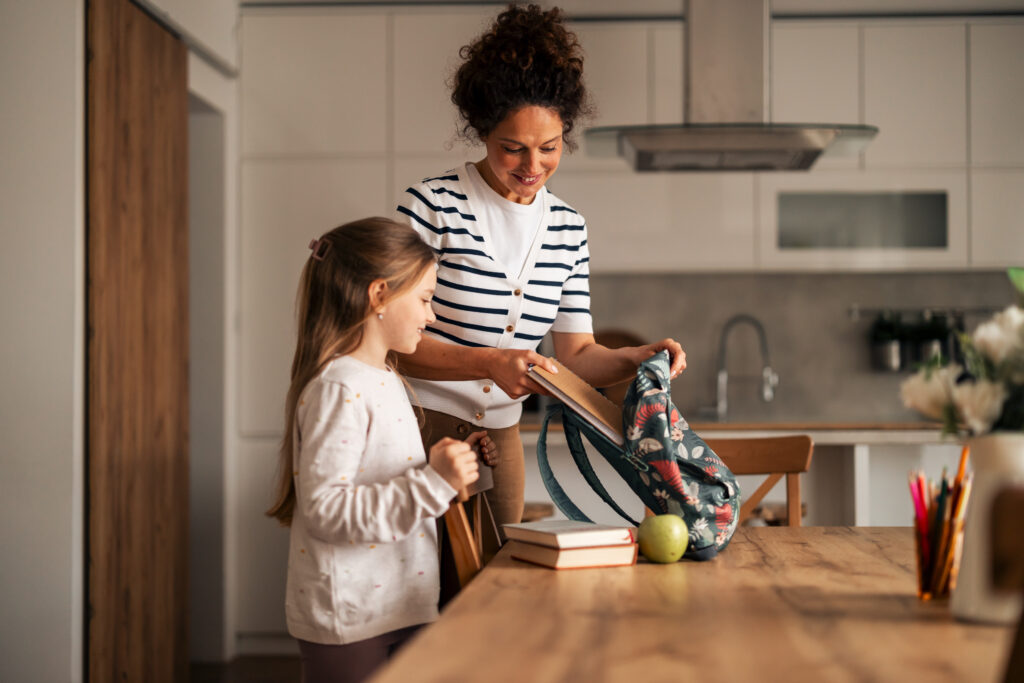
Choose one location for backpacks, lunchboxes, shoes, sports equipment and school papers.
It doesn’t have to be Pinterest-worthy. Hooks, baskets and a charging station can accomplish more than an elaborate organization system nobody uses.
Teach kids that coming home means unpacking the lunchbox, putting important papers in the designated spot and returning the backpack to its home.
Build Around Your Child
Some children concentrate best immediately after their snack. Others need movement first.
Instead of fighting your child’s natural rhythm, experiment.
A high-energy elementary student might need 20 minutes outside before tackling homework. A teenager may benefit from an hour to recharge before beginning evening work.
The goal isn’t to make every child follow the same schedule. It’s to create one that consistently gets everything done.
Protect Dinner When You Can
Houston families know the challenge of juggling school, work, traffic and extracurricular activities. Family dinner at 6 p.m. every night simply isn’t realistic for everyone.
But eating together doesn’t have to mean an elaborate meal—or even dinner.
If Tuesday night means eating sandwiches together at 8 p.m. after practice, it still counts. If breakfast is the meal your family can consistently share, protect breakfast.
What matters is creating regular opportunities to connect.
Prepare for Tomorrow Tonight
Five minutes in the evening can save 20 frantic minutes the next morning.
Before bed:
- Put backpacks by the door.
- Check the calendar.
- Fill water bottles.
- Lay out clothes.
- Locate shoes.
- Make sure sports equipment is packed.
- Plug devices into their chargers.
Older kids should gradually take responsibility for their own checklist.
Don’t Overschedule Bedtime
One of the easiest ways to derail the next school day is to let the current one run too late.
Create a wind-down period before bedtime. Dim lights, stop homework when reasonably possible and get phones out of bedrooms.
Teenagers may resist, but a 1 a.m. TikTok marathon isn’t exactly preparation for first-period algebra.
Give Yourself Permission to Adjust
The routine you imagined in August may not be the routine your family needs in September.
That’s okay.
If every Wednesday is a disaster because three activities collide, something may need to change. If homework takes twice as long as expected every night, talk with the teacher.
A good family routine isn’t rigid.
It’s predictable enough to make children feel secure and flexible enough to survive real life.
HFM TIP: Hold a 10-minute family meeting this weekend. Ask everyone one question: “What’s making school nights harder than they need to be?” You might be surprised by the answer.