

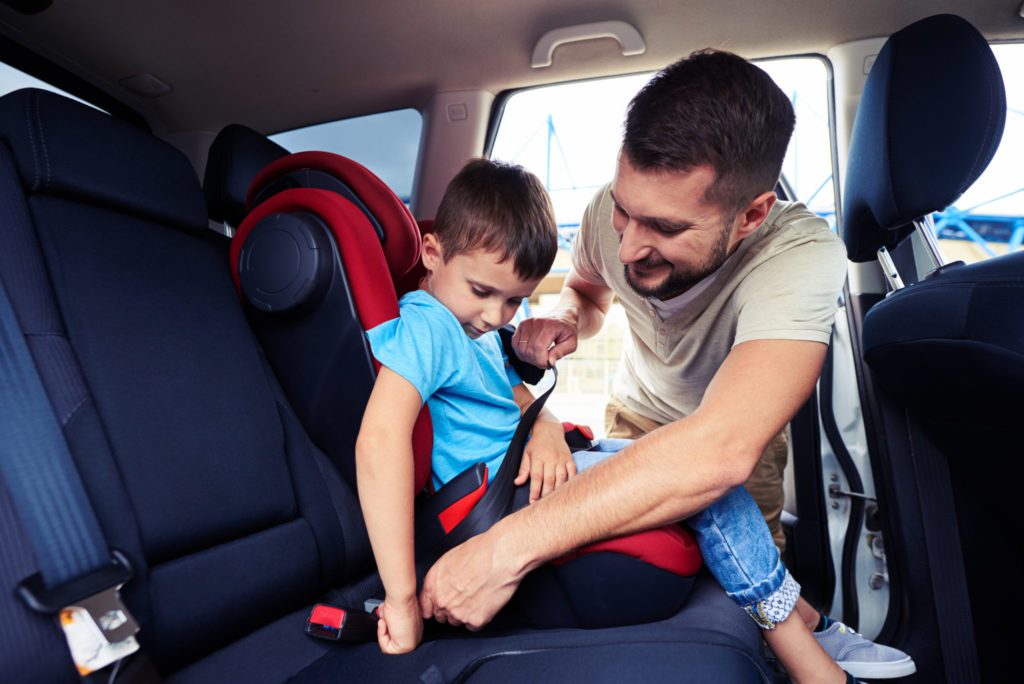
Ensuring children’s safety is a top priority for parents and guardians. A key aspect of child safety on the road is the proper use of child car seats and seat belts. To help encourage child safety, Texas has implemented car seat laws designed to protect young passengers. Understanding these laws will help you make informed decisions and ensure compliance while keeping your children safe. If you have already suffered an accident that involves a child, then the Texas car seat laws can play a significant role in determining liability and the outcome of legal or insurance claims.
Texas Car Seat Laws for Children
Texas law requires that children younger than 8 years old should be in the appropriate child safety system in a vehicle. The type of car seat required depends on the child’s age, weight, and height. If the child is younger than 8 but is taller than 4 feet 9 inches, then they are exempt from the requirement of using a child safety system. However, they must still use the vehicle’s seat belt.
Infants must be placed in rear-facing car seats. This is a safety precaution to protect the child from severe injuries in a collision. Infant car seats are designed to offer extra support for the infant’s neck, spine, and head. Parents and guardians should check the manufacturer’s specifications to ensure they are using the right size of car seats for their children.
Younger children grow fast and may need to transition to a different car seat to ensure their safety and compliance with the law. As the child outgrows the height and weight required for the rear-facing seats, they will need to transition to a forward-facing seat.
Children aged four to eight years may exceed the limit of forward-facing car seats. Booster seats may be needed until their child can use regular car seat belts.
For a child to safely use the regular seat belts of the vehicle, the belt must fit properly across the chest and shoulder. The lap belt should also fit snugly. A common mistake is to have the lap belt fit around the stomach. It should actually fit snugly around the upper thighs.
Consequences of Not Following Seat Laws
The primary consequence of disregarding the car seat laws is putting the health and safety of children at risk. When car seats and safety restraints are not used correctly, children are far more vulnerable to injury in the event of a crash. Improperly restrained children are more likely to suffer severe injuries, such as head trauma, spinal cord injuries, and other life-threatening conditions.
Along with health and safety risks, not adhering to Texas seat laws also has legal consequences. Parents or guardians who violate car seat laws could face hefty fines. The amount of the fines depends on the severity of the infraction.
Violating seat laws is something that is taken seriously by law enforcement officers in Texas. If an officer finds that a child is not properly restrained, they may issue a citation.
If there is an event where the children get hurt due to a violation of seat laws, it could result in broader legal implications. For example, your insurance claim could be denied or the payout may be reduced if it is determined that your child was not properly secured in their seat.
Not complying with car seat regulations can also be considered evidence of negligence, and this could have an impact on the liability of a car accident case. In some situations, it may reduce the amount of compensation you can recover, as courts or insurance companies may argue that the failure to properly restrain a child contributed to the severity of their injuries.
Injuries Can Affect Children Differently
The developing bodies of children are more vulnerable in a car crash. Not only are children smaller and lighter, but they also have less developed muscles and bones to protect their internal organs compared to adults. A collision can cause serious traumatic injuries that can affect them in different ways than adults. For example, if a child breaks a bone, they may need to see a pediatric specialist to ensure the bone is fully aligned and heals the right way to ensure proper growth.
One of the most dangerous types of injuries for children is traumatic brain injuries (TBI). This type of injury occurs when a child’s head experiences a sudden impact or jolt, causing the brain to move within the skull.
Since a child’s brain is still developing, they are more vulnerable to damage from even minor head injuries. In some cases, such injuries can be life-altering. The child may suffer issues with their cognitive abilities, physical coordination, and sensory abilities. Adhering to car seat laws that can reduce the likelihood that the child will suffer a serious injury in the event of a collision helps reduce the possibility of severe injuries.
Your Rights if Your Child Suffers Injuries
If your child suffers an injury in an auto accident, Texas law allows you to file a personal injury claim on behalf of your child to recover compensation for their suffering. This includes medical expenses, pain and suffering, and other losses. There could be different parties responsible for your child’s injury. For example, if the car seat malfunctions, you could hold the car seat manufacturer liable for the accident. However, you will have to prove that there was a manufacturer defect that led to the malfunction. If you did not properly install the seat then you may not be able to file a claim or lawsuit against the seat manufacturer.
Navigating the complexities of a personal injury claim that involves car seat laws can get a bit complex. Hiring an experienced attorney from an injury law firm in Houston can help you navigate the complexities, especially when dealing with accident claims or insurance matters related to child injuries. Their expertise ensures that you understand your rights and any potential impacts on your case.