

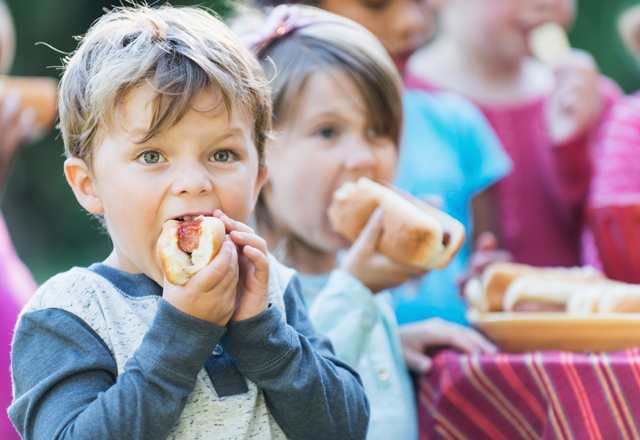
Kids love them – but eating a hotdog could be downright dangerous for children. It’s not only that they’re high in fat and loaded with preservatives – but because they’re the number one choking hazard for kids. According to research from John Hopkins Children’s Center, a whopping seventeen percent of all child choking cases doctors see involve hotdogs.
Hotdogs: A Choking Hazard?
Why is eating a hotdog such a risk when it comes to choking? According to Nisha Kapadia M.D. from Hopkins, a hotdog is just the right size to block off an airway when it’s inhaled. Young children, especially those under the age of five, are more prone to choke when eating because they don’t have a forceful jaw and a good set of teeth for adequate chewing. Plus, they may not take the time to chew food properly and, instead, will swallow a hotdog whole. To add to the problem, they don’t have a large enough lung volume to expel a hotdog once it’s inhaled.
So concerned are doctors about the choking hazards of eating hotdogs that the American Academy of Pediatrics is pleading with manufacturers to redesign the shape of hotdogs so they’re less likely to lodge in the lungs of small children. They’re also urging that warning labels be placed on hotdog packages to let parents know about the risk. One simple way to reduce the chance of a child choking on a hotdog is to cut one into small pieces lengthwise before allowing a child to eat it. The same should be done for sausage links or any other meat that has a similar shape.
Eating Hotdogs Isn’t the Only Choking Hazard
Hotdogs may be the number one choking hazard for young kids, but hard candy, grapes, and nuts follow close behind. Candy is particularly dangerous because kids are more likely to be running around as they eat it which increases the risk of choking. Any kind of round, firm food can lodge in a child’s airway and be a choking hazard.
The Bottom Line
How can the risk of a young child choking be reduced? Be aware of foods that are a choking hazard such as peanut butter, chunks of meat, raw vegetables, popcorn, and chewing gum – and make sure kids don’t have access to them. Cut softer foods into small pieces before offering them to a child and keep a watchful eye while he or she is eating them. No running around with food. Teach a child to chew his or her food thoroughly and properly every time.