

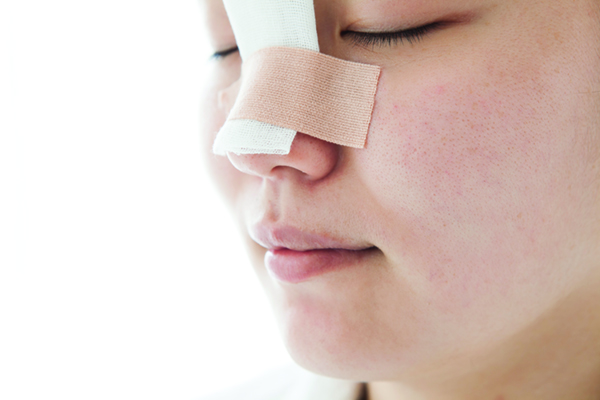
For a number of reasons, teens today are looking to plastic surgery as the solution for all that ails them, from debilitating bullying to unflattering selfies. Parents need to explore the root of their teen’s desire for cosmetic surgery, and understand when it makes sense for their kids.
By Sara G. Stephens
My mama told me when I was young
We are all born superstars
She rolled my hair and put my lipstick on
In the glass of her boudoir
“There’s nothing wrong with loving who you are”
She said, “‘Cause he made you perfect, babe”
“So hold your head up girl and you’ll go far,
Listen to me when I say”
I’m beautiful in my way
‘Cause God makes no mistakes
I’m on the right track, baby I was born this way
Thousands of football fans cheered and sang along, from the bleachers and from their homes, as Lady Gaga sang these words to her hit song, “Born This Way,” at the Super Bowl LI halftime show. It’s a song about love, unity and self acceptance.
Nobody needs to embrace self acceptance more than teenagers, but, despite the massive success of Lady Gaga’s song and young people’s yearning for deliverance on its meaning, teens today are more insecure than ever about their appearance. Their desperation to correct their imperfections happily entertains any solution. In some cases, the quest for a fix leads them to the office of their local plastic surgeon.
Teens Under the Knife
“No age group is more self-conscious or acutely aware of social differences than teenagers, so it’s no surprise that teens think of plastic surgery as a tool to feel better about themselves,” says Dr. Malik Kutty of Luxe Plastic Surgery, Sugar Land. “They see it on TV and the Internet all the time. The difference with younger people is that plastic surgery is reasonable in only a few situations. Those are surgeries done for functional problems that also happen to provide cosmetic improvement.”
An annual study conducted by the American Society of Aesthetic Plastic Surgeons (ASAPS) revealed that the most common surgical procedures in the 13-19 age group are otoplasty (ear pinning); rhinoplasty (nose reshaping); female breast reduction; breast augmentation (female); liposuction; and treatment of gynecomastia, or male breast reduction. In its annual study the ASAPS reported that cosmetic surgical procedures in patients age 13-19 represent less than 2% of all cosmetic surgical procedures done each year. This number represents a slight decrease (1.9%) during this time period in 2015.
Still, that’s 43,511 teens who are electing to nip and tuck these days, and parents are wise to ask, “Is it okay?” The answer to this question is strongly tied to why the plastic surgery is being considered.
Why Plastic Surgery?
According to the American Academy of Facial Plastic and Reconstructive Surgery (AAFPRS), reasons to consider plastic surgery are divided between cosmetic and functional goals. For example, in the instance of rhinoplasty, sports- and accident-related injuries or a congenital malformation of the nose may affect a teen’s ability to breathe easily, a condition that can be corrected with surgery. Other teens seek surgery for purely aesthetic objectives. These are the drivers we’ll explore here.
– Self loathers: A common goal associated with aesthetics-driven surgery is to improve self-esteem. Houston-based surgeon Dr. Camille Cash explains the unique transformations occurring in the body and mind of a teenager. The changes are rapid and sometimes awkward, and they pair with external forces to shape the teen’s self-image–which, in turn, shapes self-worth. “Pressure from peers, parents, coaches, and even the media to conform to a certain body type or ‘look’ can contribute to a struggle with self-image and self-esteem,” Dr. Cash says.
“And with teenage celebrities like Kylie Jenner admitting to having cosmetic procedures [at the age of 16, she had her lips plumped, and possibly had her buttocks, breasts and nose done, too], teens can feel pressure to go through extreme measures to conform to perceived beauty standards. Not meeting these standards can cause teens to feel less secure in their own physical appearance.”
Dr. Cash cites a study from The American Society of Aesthetic Plastic Surgery that suggests patients’ psychological burden stemming from appearance-related issues, particularly breasts, was significantly decreased after surgery: “Authors concluded that surgery in this group may actually improve physical, psychological and emotional burden and improve condition of teenagers and attain bodily satisfaction, both for aesthetic and reconstructive issues.” [Cosmetic Surgery National Data Bank Statistics, 2015]
Dr. Cash points out that cosmetic breast augmentation is not approved by the Food and Drug Administration (FDA) in girls younger than 18 years of age, as their bodies may not have finished developing, and they may not understand the risks or be psychologically ready to handle the outcome of the surgery. “Procedures performed in this age group are considered off-label,” she warns.
– Stargazers and Selfie Citizens: Dr. Gilbert Lee, of San Diego-based Changes Plastic Surgery, takes the matter a step away from self-esteem. For him, the aesthetic driver behind teens’ wanting plastic surgery is exposed in the book Generation Me [Jean M. Twenge], which talks about an increasing sense of entitlement and narcissism among today’s youth. “I believe this type of behavior may be responsible for the interest in plastic surgery and aesthetic treatments among the younger generation,” Dr. Lee says. “Younger people are embracing the chance to look like the celebrities and influencers they admire and to look better on social media and gain more followers.”
A 2016 survey of AAFPRS members confirms Dr. Lee’s observations, reporting that one of of the two top drivers for cosmetic procedures is the impact of social media. Compared with last year, 42% more surgeons reported patients seeking cosmetic procedures to look better in selfies, Instagram, Snapchat, Facebook Live and other social channels. Eighty-two percent of surveyed surgeons cited celebrity comparisons as a major influence in patients’ desiring cosmetic procedures.
“Social media presence and perceptions have become almost as, if not more important, than personal interactions for many teens and young adults,” says Dr. Edwin Williams III, President of the AAFPRS. “We’re living in a time when someone’s profile, be it on Facebook, Instagram or a dating site, is often the first impression Millennials get of each other.”
AAFPRS further explores the “Kardashian Effect” or “Selfie Mania:” the influence of celebrities and social media on Millennials’ decisions to have facial cosmetic procedures. “The year 2015 saw the phenomenon reaching beyond Kim-inspired butt injections, with Kylie and Kendall eclipsing their older siblings in the spotlight. Between their staggering Instagram following, high profile friends and endless stream of up-close-and-personal selfies, the next generation of the Kardashian clan spurred a flurry of interest in facial feature enhancements from their peers,” a 2016 press release from the organization reports.
“The teen and young adult years are a highly impressionable time, and the more consumers are inundated with celebrity images via social media, the more they want to replicate the enhanced, re-touched images that are passed off as reality,” Dr. Williams explains. “We are seeing a younger demographic than ever before seeking consultations and treatments with facial plastic surgeons all over the country.”
According to AAFPRS, the influence of celebrities and selfies on plastic surgery is not just a Gen X movement. Patients of all ages are becoming desensitized to plastic surgery as more celebrities come clean about their cosmetic tweaks. Having a little “work done” has become less taboo. In fact, 82 percent of surveyed surgeons reported that celebrities were a major influence in their patients’ decisions to have plastic surgery last year.
Consider Regret
All the surgeons interviewed for this article agreed on at least one point: teens must understand that plastic surgery is not a panacea.
A 2012 study [Predictors of cosmetic surgery and its effects on psychological factors and mental health: a population-based follow-up study among Norwegian females] seems to confirm the idea that at least at younger ages, plastic surgery patients are a more troubled group—and the surgery didn’t help. This study followed more than 1,500 teenage girls for 13 years, with the researchers not knowing who would actually have surgery in that time. The 78 girls who did were more likely to be anxious or depressed and had a greater increase in those symptoms over the period than non-patients. The study suggests that the girls who chose to have cosmetic surgery tended to have a history of subpar mental health to begin with, and having the surgery did not help the situation.
“Every surgery comes with risks, and it’s incumbent on the surgeon to explain these risks and talk to you openly about how the procedure may align with your aesthetic goals, as well as the changes cosmetic surgery won’t make,” Dr. Kutty says. “It’s important to remember that, although a cosmetic procedure might address an aspect of your appearance that you are unhappy with, it doesn’t completely reverse your peers’ perceptions of you.”
In an article called “My Plastic Surgery Regrets” [The Daily Beast], author Michele Willens refers to “the guilt, the embarrassment, and the disappointment that life pretty much goes on as it was.” This can be a bitter reality for the teen who undergoes plastic surgery thinking it will change her social status, her self-esteem, and her life, then finds that she, and her circumstances, are largely unchanged.
In the same article, New York psychologist Dr. Vivian Diller discusses how she talks many patients through their conflicting feelings over the decision, asking what they expect in return, and for whom they are really doing it. “Cosmetic changes may seem superficial, but they are permanent and have far-reaching emotional consequences,” Diller is quoted as saying in the article.
In 2015, Jenn Morson posted to her blog “I Regret Getting Plastic Surgery: My youthful desperation for a new nose has turned into an adult longing for my old face.” A piece of her writing has been excerpted here to illustrate how a teen’s identification of self-worth can changed radically and unexpectedly as he or she transitions into adulthood.
“I had hated the nose I was born with for nearly my entire life. I did not care that it was in some ways a part of my identity, that I shared this trait with my deceased Jewish mother. No, I wanted it gone. I wanted a ski slope, movie star, tiny button nose. When people complimented my lovely brown eyes, all I heard was the non-existent slams on my clearly-hideous schnozz. It was close to an obsession.
Morson decided to have her nose fixed after a run-in with a sliding glass door that made the decision much easier to make.
“My new nose was a perfect, glorious, acute angle. As time passed, however, I started to miss my old nose, which seemed so ridiculous to me that I tried to just brush it off. I had spent years looking forward to getting rid of it, after all, and I knew I looked so much better. But I didn’t look like me, and that was an unsettling feeling. What had caused me so much angst turned out to be an integral part of my identity. In putting so much emphasis on this one feature, I had neglected to recognize the beauty of imperfection. Sure, I could see it in other people quite readily, but in myself, I had grossly exaggerated a little bump into incapacitating self-consciousness.”
Making the Decision
AAFPRS offers the following questions for you and your teen to consider when deciding whether plastic surgery is a good move for him or her:
- Why do you want to change your appearance? Discuss with your teenager why he or she may feel insecure. Are the concerns well founded? One teenager suffered years of acne and was left with extensive scarring. After he and his parents pursued scar revision surgery, the teen expressed that his biggest joy was not being teased about the scarring like he had been teased about the acne. Teens who pursue facial plastic or reconstructive surgery are looking to feel more confident and have a better self-image.
- What feature do you want to correct? Physicians will not recommend an invasive procedure just so the teenager may look prettier. Surgeries that produce subtle results with minimal benefits are not recommended. Rhinoplasty, including cosmetic and reconstructive (e.g., correcting a nasal obstruction or cleft palate reconstruction), is the most popular procedure performed on teenagers. Other surgeries that may be appropriate include otoplasty (ear surgery), blepharoplasty (eyelid surgery), chin augmentation, and scar revision.
- What are your expectations for the results? Before deciding on a procedure or treatment option, discuss with your teenager what they hope to achieve by changing their appearance. Just because they alter their appearance does not mean that they will automatically become popular and get straight A’s. Your physician will ensure that there is no pressure from family or friends to have surgery and that the teenager fully understands the procedure and results.Your Job as a Parent
It is our job as parents to ensure our kids feel secure and self-assured. We want their lives to be free of hardships, both emotional and physical. But we would be ill-advised to either immediately shut-down or immediately embrace our teens’ interest in plastic surgery as a means of helping them. Rather, we need to take the time to ask questions. Drill down for root causes. Explore other means of promoting self-esteem. If, after these efforts, plastic surgery still seems a possible way to go, a surgeon can screen for maturity, motivations and expectations.
If you find yourself scouring the Internet for a good plastic surgeon, be sure the surgeon you choose one that is certified by the American Board of Plastic Surgery. State laws permit any licensed physician to call himself a “plastic” or “cosmetic” surgeon, even if not trained as a surgeon.
Another word of caution from Dr. Williams: “The commoditization of cosmetic procedures, both surgical and especially non-invasive, is increasing due to Groupon® and other daily deal aggregators as well as the prevalence of plastic surgery on TV,” says Dr. Williams. “When we see things like BOTOX® offered in gyms and salons, or on-demand injectables through new apps, this runs the risk of demedicalizing what truly are medical procedures that should be administered in a controlled environment by a highly trained healthcare professional.”
A Final Word
Putting the option of plastic surgery aside for a moment, there’s room for parents to play an important role in shaping their kids’ self-esteem. Maybe the one thing we do wrong, for all the right reasons, is to tell our children they are perfect just the way they are. Teens might be better served by hearing instead how to handle social pressures, accept their imperfections and be comfortable in their own skin.
Don’t hide yourself in regret
Just love yourself and you’re set
I’m on the right track, baby
I was born this way…