

Summer is just around the corner, and for many Houstonians, a road trip to the beach is already on the family calendar. Whether you enjoy the short drive to Galveston, head South to Padre or jaunt East to Alabama or Florida, it’s important for your health and safety to know what those beach-area, water-quality warnings really mean. The whole family should be in the know about the flow of Gulf Coast waters.
Bacteria vs. Poop: Dial down the hype. Many news outlets and social media friends might throw out headlines or share sensational graphics about water conditions, especially following big weather events or heavy rains. Enterococcus (fecal) bacteria is not poop, but it is the bacteria that feeds off waste from warm-blooded animals, including humans. The Gulf of Mexico is a body of water that catches it all: storm water runoff, as well as occasional overflow from sewage treatment plants, septic tanks, boating waste, and other yuck. When tests are positive for Enterococcus (fecal) bacteria, the water is dirty, and the bacteria is clearing it away.
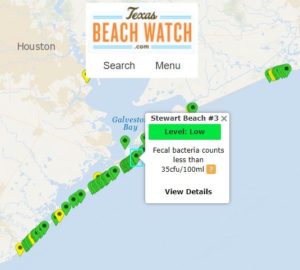
Know Before You Go: Click for a quick look at water warnings at Texas Beach Watch updated in real-time by the Texas General Land Office. One click and you’ll see specific beaches with green (safe), yellow (caution) or red (closed) flags. You can even sign up for email alerts per beach. Officials regularly test the water conditions (during peak beach season of May- October) at more than 70 specific beaches for enterococcus (fecal) bacteria. Local officials, like Galveston County Health District, also gather and post regular test results. If your internet is down, most counties update permanent signs in the sand with warnings. In Galveston, you can see them along the seawall, and warnings rarely last longer than 48 hours. Click here for statewide water quality updates in Alabama and Florida.
Don’t Gulp or Ingest Swim Water: Keep your mouth closed and be safe- ANYWHERE you swim. Recreational water illnesses (RWIs) are caused by germs and chemicals found in the water where we swim, according the Centers for Disease Control (CDC). RWI germs spread by swallowing, breathing in mists or aerosols of, or having contact with contaminated water in swimming pools, hot tubs, water parks, water play areas, interactive fountains, lakes, rivers, or oceans. Symptoms range from diarrhea and vomiting to skin, ear, eye, wound and even respiratory infections.
Never Swim with Open Wounds: In a report from the Texas Department of State Health Services, cases of Vibrio Vulnificus have been on the rise for years. Official beach alerts don’t give information on this disease, but it’s also associated with warmer temperatures and saltwater. For additional information, visit https://www.cdc.gov/vibrio/

Houston Family Magazine
Be Proactive: Storm water run-off is the biggest culprit of increased levels of enterococcus (fecal) bacteria. You and your family can pick up litter, dog poop and other dirty items that might mix in and travel south with rainwater to the Gulf. Don’t run your dishwasher or laundry during a rainstorm, as it can overload our waste-water treatment plants. When you’re at the beach, use appropriate restrooms; don’t hand-feed the seagulls who might poop while they dine; and never leave food or trash lying around which might attract birds or other animals for a beach feast.
Keeping our Gulf Coast beaches clean and safe is an ongoing job for everyone. Know that safe-guards are in place and you should always heed the warnings from officials. Sensational headlines should never scare you or your family, as long as you remember, it’s only Mother Nature doing her thing, and we are all in the know about the flow in the Gulf of Mexico.